

The Post-Arc Era
We’ve previously discussed the Arc browser, known for its sleek design and complex features. Recently, its creator, The Browser Company, announced that Arc is no longer their main focus.
Arc has always been polarizing, with users either loving or hating it.

Fans of Arc Appreciate:
- Exceptional tab management and multitasking capabilities, offering a fresh browsing experience.
- Unique features like Peek and AI assistance, not found in most browsers at the time.
- Its aesthetic appeal, with a beautifully designed interface that enhances user experience.
Critics of Arc Complain:
- High performance and memory demands, along with early security concerns.
- A steep learning curve due to its complexity, making it hard for some to adopt.
- Initially exclusive to Apple platforms, and later versions for Android (Arc Search) and Windows fell short of expectations.
Personally, I’ve mentioned before that The Browser Company’s frequent PR moves and inconsistent product features (remember the early Arc web selection tool?) suggest a somewhat erratic approach. Their recent shift away from Arc could be seen as a costly gamble, reminiscent of certain so-called successful companies with ADHD-like tendencies, which some venture capitalists find appealing.
Fortunately, several people have recommended an open-source alternative to Arc: Zen Browser, which I’m excited to introduce today.
Introducing Zen Browser

Zen Browser is a free, open-source product based on the Firefox engine, currently in its alpha phase but available for download.
Its layout resembles Arc, borrowing many features, though some find its design less appealing. For those accustomed to Arc’s core features, Zen Browser should be easy to pick up.
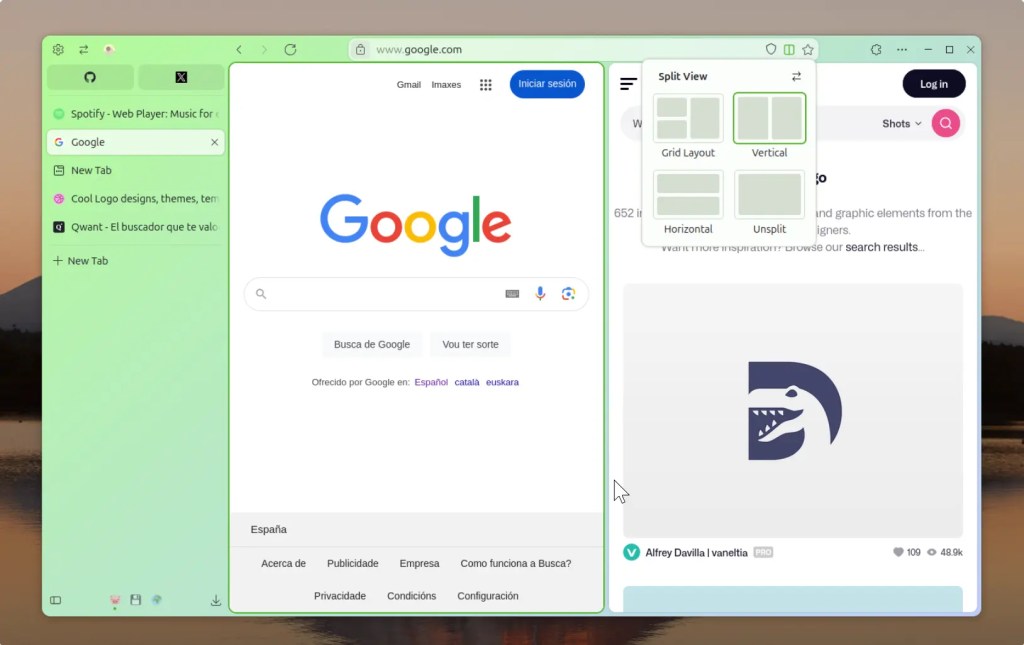
Tab Management
Zen Browser mirrors Arc with vertical tabs and fixed tab icons, featuring a timed unload mechanism.
This layout effectively reduces tab clutter. Microsoft Edge could benefit from adopting a similar design, being the closest competitor in this style.
By the way, “fixed tab icons” are not bookmarks. For bookmarks, there’s a dedicated bar. Fixed tab icons are tabs that won’t unload, displayed as thumbnail icons. Additionally, pinned tabs won’t unload but don’t appear as thumbnails. Regular Arc users will find this familiar.

Workspaces
Workspaces allow separate tab groups, like “Work” and “Personal,” keeping them isolated. This addresses one of Arc’s promises to solve tab chaos. Many users love this feature. Zen Browser supports workspaces and quick switching with shortcuts, a feature Arc users particularly enjoy.
Even before Arc, niche browsers had implemented workspaces. I vividly remember SigmaOS, which was also excellent. I hope Chrome fully adopts this (its TabGroup feature is the closest).
In Zen Browser, although web tabs are grouped separately, the top fixed tab icons are shared across all workspaces.
Additional Enhancements
- Glance (Arc’s Peek): Opens a small window for link previews. All browsers could benefit from this.
- Split View: Allows side-by-side browsing of two pages, a feature found in niche browsers like Vivaldi.
- Sidebar: Similar to standalone apps embedded at the screen edge, Zen Browser integrates a mini web view for quick access to tasks like search, weather, email, and more.
- AI ChatBot: An experimental feature allowing content summarization using AI models, requiring user login.

Firefox Plugin Support and ZenMod Marketplace
I’m pleased that my favorite Chrome extensions have Firefox versions I can use directly. The ZenMod marketplace is early-stage, aimed at developers for browser customization, though nothing noteworthy is available yet.
Privacy Focus
Zen Browser includes built-in “tracking protection” to prevent tracking, likely a default Firefox feature. Most mainstream browsers offer similar settings, though not always enabled by default.
In Conclusion
Zen Browser is still in its alpha stage, with frequent updates and potential for significant changes. As an open-source project, it faces challenges compared to mature commercial entities, such as design, strategic direction, and update efficiency. Being free, its sustainability is uncertain, reminiscent of Firefox’s struggles.
Overall, I hope more browser options emerge to prevent market dominance by one or two giants. Newcomers drive innovation. While Arc may not suit me, it undeniably stirred the market and influenced successors like Zen Browser, inheriting many intriguing features that traditional browsers hesitated to explore.
If you’re intrigued by Arc or Firefox’s core but hesitant about those platforms, Vivaldi (Chromium-based) might be a close alternative worth considering.




 My Own Sys
Leave a comment